
Webinars
It’s Hard to Fix What You Can’t See Making Tree Root Quality Measurable with Ground-Penetrating Radar (1 ISA CEU, 1 LACES PDH)
Tree root quality has long been recognized as one of the most important, yet least measurable, factors influencing the long-term success of urban trees. Throughout the nursery-to-landscape supply chain, critical decisions still rely largely on visual inspection, experience, specifications, and standards because much of the root architecture that may determine a tree’s future remains hidden…
Read MoreReaching Canopy Goals Require More Than Just “Planting” (1 ISA CEU 1 LACES PDH)
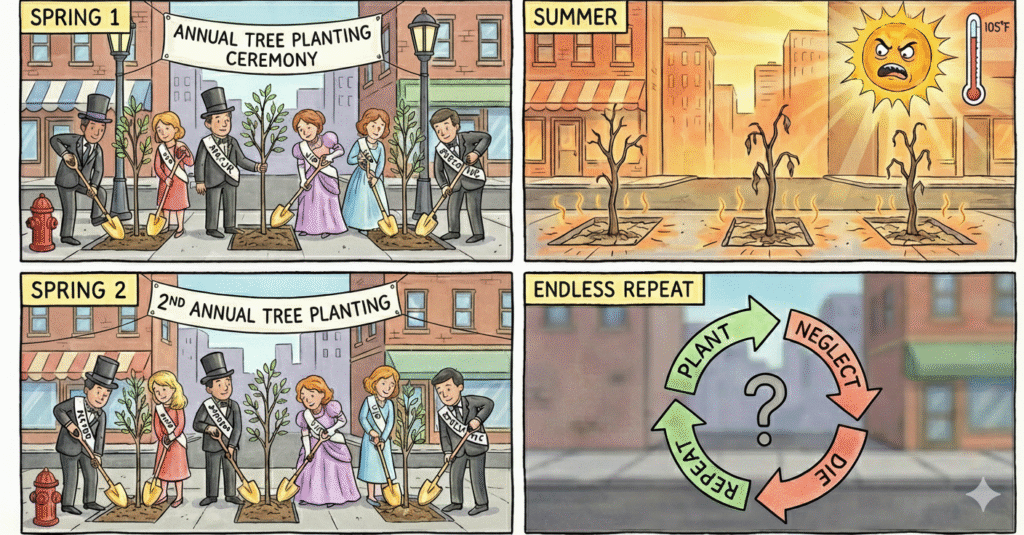
Among the common factors affecting the survival of newly planted trees, under-watering and over-watering are the top two. Providing water to newly planted trees for the first 2-5 years is critical for their survival and growth to receive the benefits and return on investment. We all have seen and probably participated in one of the…
Read MoreDeicing Salt: The Silent Killer of Urban Trees (1 ISA CEU 1 LACES PDH)
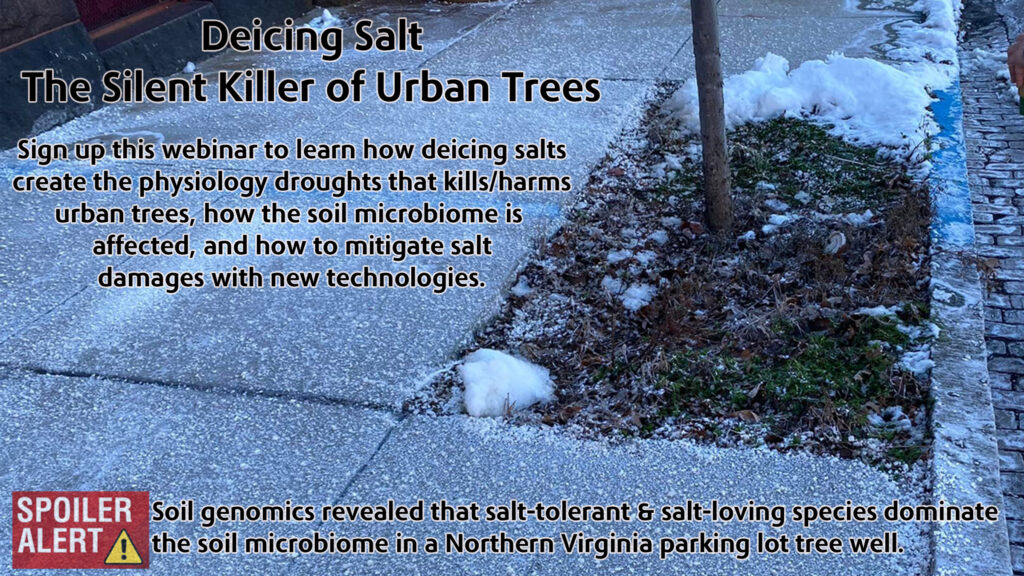
Sodium Chloride, the most predominant salt used on streets for melting snow and ice, is the lubricant of the modern lifestyle in northern climates during wintry weather conditions. These same streets and parking lots are also the battleground where urban foresters strive to build green infrastructure for canopy coverage, stormwater management and aesthetics. It is…
Read MoreSoil Moisture: The Most Important Factor for the Survival of Newly Planted Trees (1 ISA CEU 1 LACES PDH)
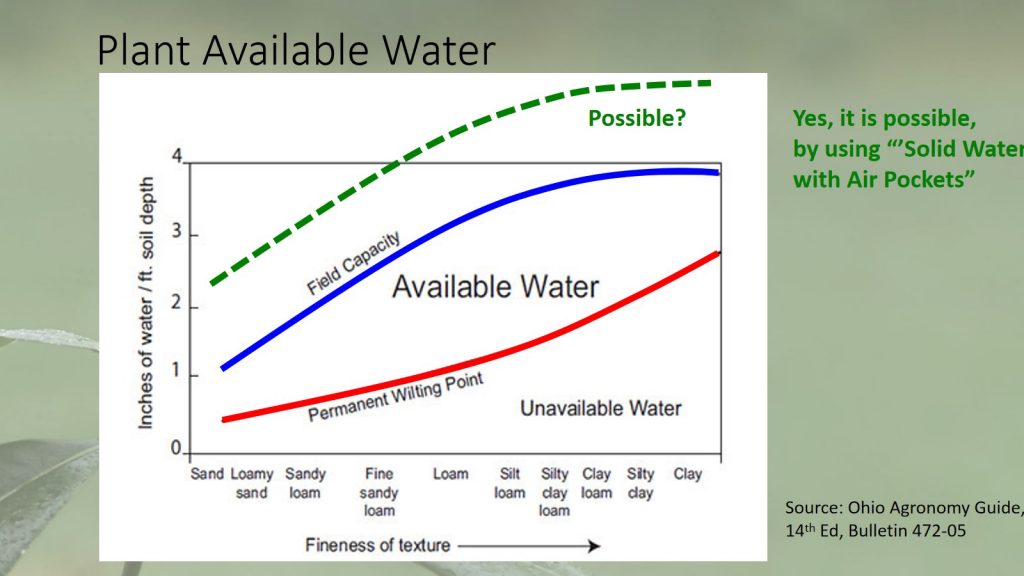
The most common cause of death of newly planted urban trees is under- or over-watering. To battle this problem, there are many guidelines written to prescribe how much water for newly planted. However, none of these prescriptions addresses the watering application efficiency: How much water evaporates, runs off, lost via drainage in porous soils, and…
Read More“‘Solid Water’ With Air Pockets” for Watering Trees

Newly planted trees need 2-5 years of watering to grow back the lost roots during the transplanting process for farm-grown trees. Container-grown trees need similar time to be weaned from the irrigation system. Different watering methods can be used. But all methods will have to deal with the reality: Plant Available Water (PAW) as the…
Read MorePitching green infrastructures to political leaders: not just benefits, but also tax $

The COVID 19 pandemic exposed the limited and unbalanced access to green infrastructures (GIs). There are many publications about the benefits of GIs. Interestingly, most of the audiences/readers are the believers. It is more of “preaching to the choir”! At the same time, a significant percentage of population does not (or does not want to)…
Read More