
Green Webinars
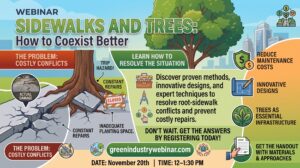
Sidewalks and Trees: How to Coexist Better(1 ISA CEU 1 LACES PDH)
Most communities have street trees and sidewalks. Either past, present or future designs have created conflicts between tree roots, trunk flares and sidewalks, curbs and gutter, and driveway approaches, walkways, and more competing infrastructure. The first essential step is to consider the trees infrastructure either as valuable or more valuable than the other infrastructure on…
November 20, 2026 12:00-1:30 PM ETSpeakers: Gordon Mann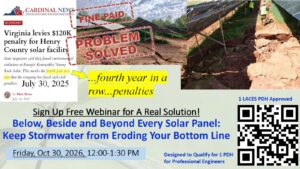
Below, Beside and Beyond Every Solar Panel: Keep Stormwater from Eroding Your Bottom Line (1 PDH LACES)
Stormwater runoff from utility-scale solar farms can be destructive. It doesn’t just erode the soil, but also the profitability when the stormwater-related operating costs and regulatory fines are considered. Low Impact Developments (LID) and Green Stormwater Infrastructure (GSI), e.g. bioswales, bioretention and infiltration basins, are often the choice for stormwater management. Originally developed for populated…
October 30th, 2026, 12:00-1:30 PM ETSpeakers: Wei Zhang, Ph.D.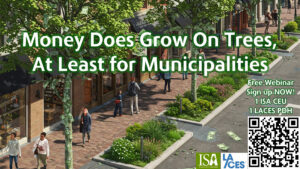
Money Does Grow on Trees, At Least For Municipalities (1 ISA CEU 1 LACES PDH)
Community forests are vital to our communities’ ecosystems by offering many benefits including providing shade and cooling temperatures, reducing stormwater runoff and flooding, removing pollutants from the air and water, enhancing residents’ overall health, and improving the quality of life in our communities. These benefits, however, can only be realized with healthy mature trees, which take decades…
Friday, October 16, 2026 12:00-1:30 EDTSpeakers: Gordon Mann and Dr. Wei Zhang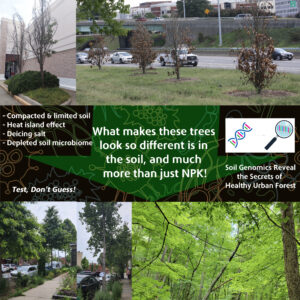
Healthy Soils Support Healthy Trees – The Amazing Soil Genomics (2 ISA CEU 2 LACES HSW PDH)
Urban trees are vital to our urban ecosystems. Green industry professionals understand the benefits large mature trees provide and their effects on health and quality of life of residents. However, urban trees face various challenges, including soil degradation, pollution (including deicing salts and pesticides), invasive pests, compaction, extreme weather conditions and many other stress…
Friday, September 25, 2026 12:00-2:30 EDTSpeakers: Wei Zhang, Ph.D., Gordon Mann and Peter Caldwell, PLA
Green Stormwater Infrastructure: Does it Work? (1 ISA CEU 1 LACES PDH)
Green Stormwater Infrastructure (GSI) is typically built for multi-purposes: reducing peak runoff volume of stormwater runoff, removing pollutants, and providing the benefits of green space as well as for recreational purposes. Vegetation is used in GSIs to achieve these functions. It is also called Low Impact Developments (LID). By definition and by the term, LID…
Friday, August 21, 2026, 12:00 PM – 1:30 PM EDTSpeakers: Wei Zhang, Ph.D. and Gordon Mann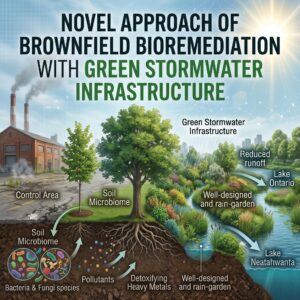
Brownfield Restoration with Tree Planting and Soil Microbiome
Vegetation on urban sites plays a vital role in stormwater management and pollution control. Urban sites, especially those that have a history of industrial use, often release various levels of contamination into the waterbodies through surface runoff and groundwater flow. In Oswego County, much of this contamination eventually discharges into Lake Ontario. Strategically planted trees and shrubs…
December 16, 2026 12:00-1:30 PM ETSpeakers: Karen Noyes, Wei Zhang, Ph.D.
Irrigation Salinity: Is Reclaimed Wastewater the Solution to Urban Trees in Arid Area? (1 ISA CEU 1 LACES PDH)
Soil salinization occurs naturally or due to human activities, such as deicing salts during winter storms, irrigation and fertilization. Irrigation salinity often happens in arid or semi-arid region. It is because almost all irrigation water (even natural rainfall, picked up from atmospheric aerosol) contains some dissolved salts. The dissolved salts content can be very high…
Friday, July 24, 2026, 12:00 PM – 1:30 PM EDTSpeakers: Wei Zhang, Ph.D.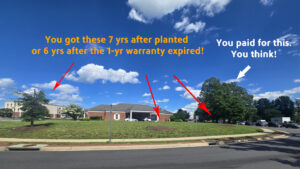
Say “NO” to 1-Year Warranties on Newly Planted Trees (1 ISA CEU 1 LACES PDH)
A one-year warranty is a very common specification for landscape projects. One year may be enough for smaller shrubs and plants. However, it takes 2-5 years for medium-sized trees and longer for large-sized trees to successfully establish. Most ball & burlap trees lose 80+% of their root system during digging and transplanting. Container-grown trees come…
June 19th 12:00-1:30 PM EDTSpeakers: Gordon Mann, Wei Zhang, Ph.D. and Jim Urban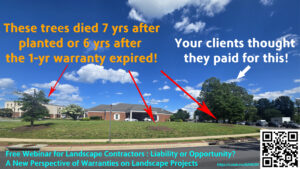
Liability or Opportunity: A New Perspective of Warranties on Landscape Projects
The common 1-year warranties on newly planted trees can be a liability for landscapers. For smaller-sized plants, it may be enough for them to establish. But medium- and large-sized trees may take 2-5 or even 10+ years to establish. That is because most farm-grown trees lose 80+% of their root system during transplanting. It has…
August 26, 2026, 12:00-1:00 PMSpeakers: Dr. Wei Zhang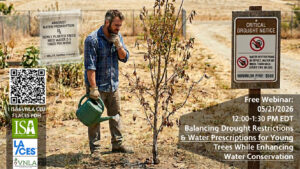
Balancing Drought Restrictions and Water Prescriptions for Young Trees While Enhancing Water Conservation (1 ISA CEU 1 LACES PDH)
Municipalities impose water restrictions during droughts and when water is in shortage. The most commonly restricted areas is landscape irrigation. While lawns can be restored within weeks, it take decades for trees to grow to their mature size, when the benefits of trees are at the maximum. Water restrictions disrupt the growth of the trees…
May 21th 12:00-1:30 PM EDT