
Irrigation Salinity: Is Reclaimed Wastewater the Solution to Urban Trees in Arid Area? (1 ISA CEU 1 LACES PDH)
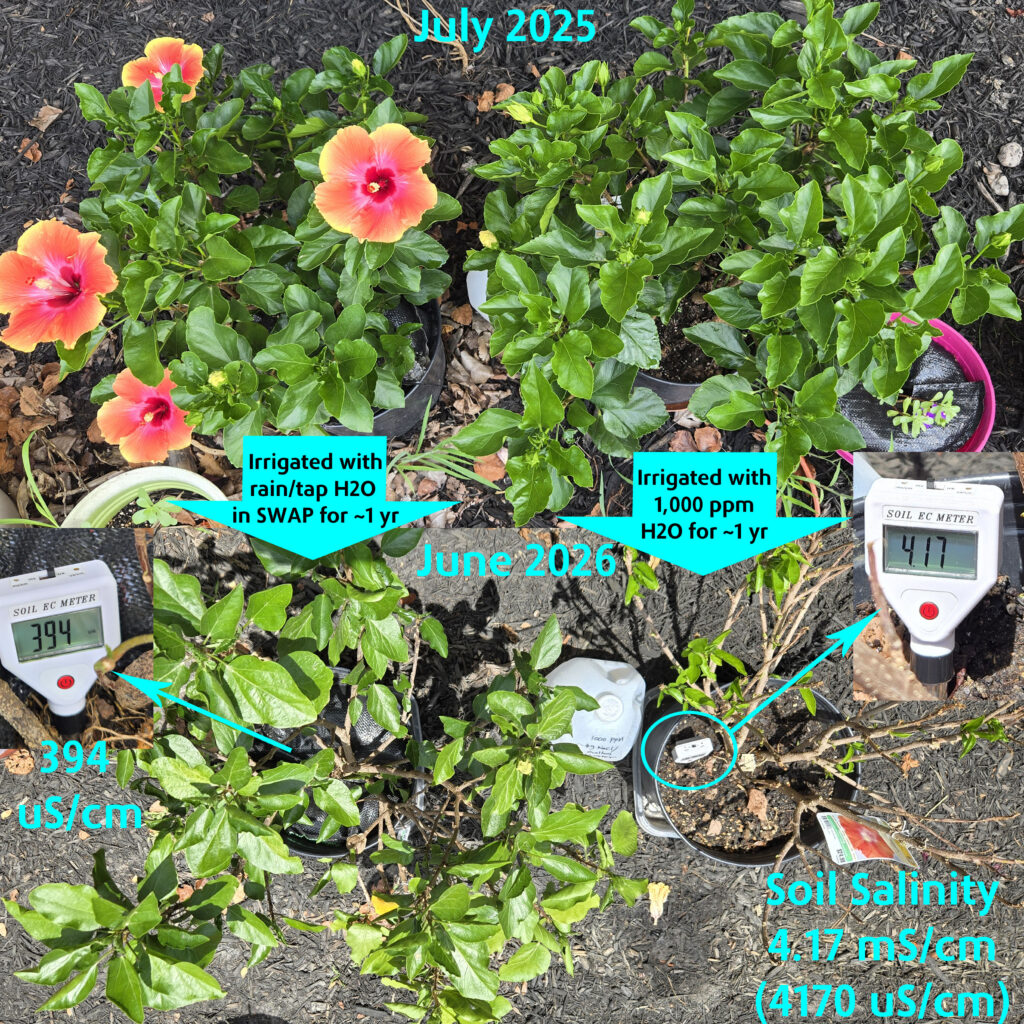
Soil salinization occurs naturally or due to human activities, such as deicing salts during winter storms, irrigation and fertilization. Irrigation salinity often happens in arid or semi-arid region. It is because almost all irrigation water (even natural rainfall, picked up from atmospheric aerosol) contains some dissolved salts. The dissolved salts content can be very high in some water sources such as surface or ground water, reclaimed waste water, and fertilizer-added water. After the water is used by plants or evaporated, the salts–excess amount of plant nutrients and non-nutrients–stay in the soil. With time, it builds up the salinity. Most plants can handle salinity to a certain degree. But when it is too high, plants start to be stressed and the growth can be significantly affected.
In wet climates, precipitation can be used to reduce salinity during the wet season as long as the soil is not heavy clay, not compacted and not waterlogged. However, in arid and semi-arid climates, the salinity can built up over years and decades. The more irrigation water one use, the more salt it is introduced to the soil.
For most agricultural crops, this slow salinity buildup may affect the yield. But farmers can switch to more salt tolerant crops. In the case of urban forests, vineyards and orchards that meant to stay in one place for decades and centuries, irrigation with water sources with high salt content is like a slow suicide and it will become catastrophic on a future day.
How to reduce irrigation salinity? Reduce irrigation and reduce evaporation! Then make the best use of natural precipitation (the best source of water for irrigation) during the rainy season to rinse the salts off. This talk will introduce new technologies that can achieve all the above by reducing 90% of irrigation water use, capturing rainwater and by releasing the water when triggered by the presence of salt.
Learning objectives:
- Learn about sources of soil salinity and the current state of art on irrigation
- Discuss the purposes of growing urban trees, their benefits and why irrigation salinity makes it hard to realize the long term benefits of urban trees
- Learn a novel solution to irrigation salinity that will not only reduce the soil salinity, but also improve the overall health of trees
Preapproved for 1 CEU/PDH by ISA and ASLA LACES.


Register for the Webinar on CVENT: https://cvent.me/y9A1Bw