
Deicing Salt: The Silent Killer of Urban Trees (1 ISA CEU 1 LACES PDH)
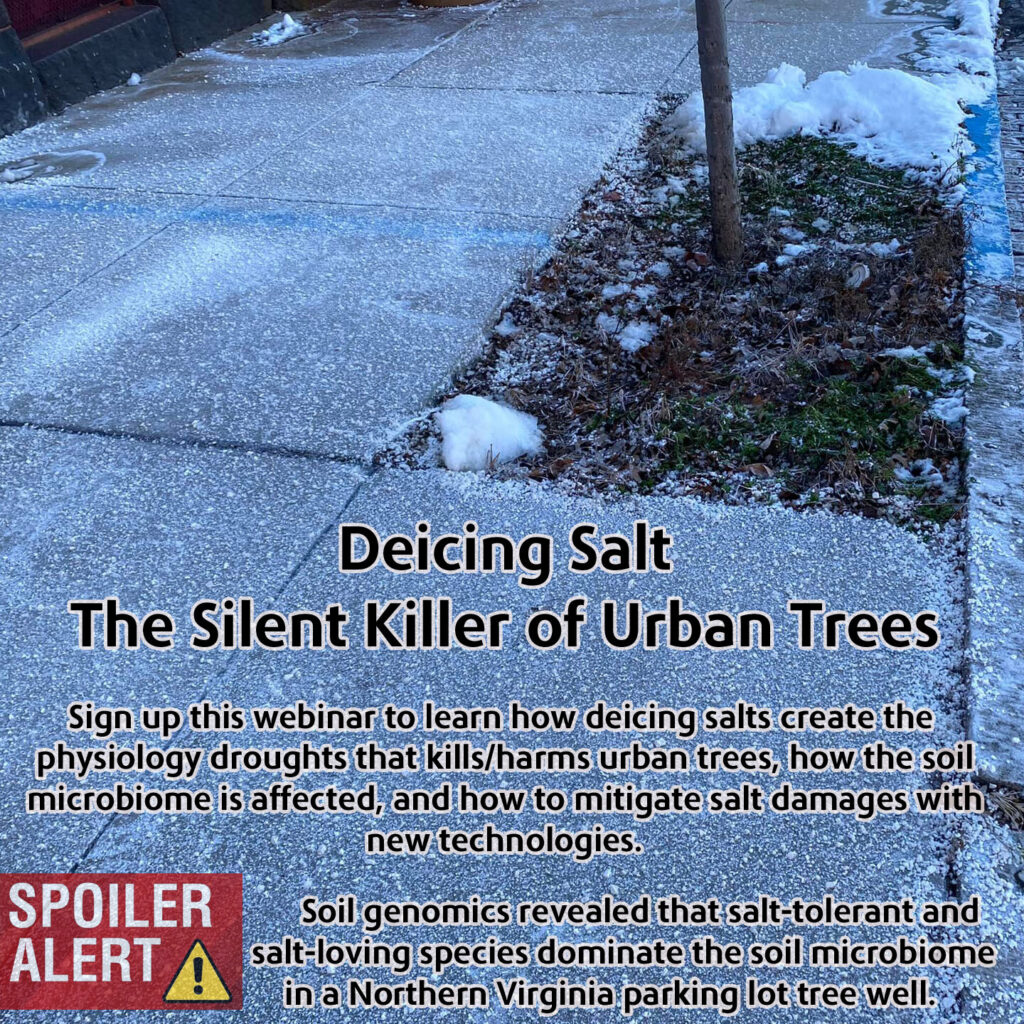
Sodium Chloride, the most predominant salt used on streets for melting snow and ice, is the lubricant of the modern lifestyle in northern climates during wintry weather conditions. These same streets and parking lots are also the battleground where urban foresters strive to build green infrastructure for canopy coverage, stormwater management and aesthetics.
It is all too common to observe damages and casualties on roadsides in spring when plants begin to display the impacts of salt through discoloration and canopy loss. At this stage, it is often too late to remedy and correct the damaged plants. The urban forestry community is keenly aware of the issue. Many landscape professionals have snow removal as part of their responsibility. Spreading salts is a big part of their standard operating procedures for winter weather. This scenario is magnified in areas with high population density and minimal tree canopy coverage. Trees are likely to experience road salt damage in these communities.
The urban forestry community is aware of the issue. Many of these professionals have snow removal as part of their responsibility requiring salts as part of standard operating procedures. But during wintry weather, there hasn’t been a viable solution other than educating snow removal professionals about reducing the volume of salt and using alternatives, which creates other environmental issues or financial issues. As a simple compound, sodium chloride doesn’t decompose, evaporate, or disappear magically. It has to be rinsed out of the soil and washed away. Unfortunately, the irrigation systems are not available when the salts are applied. They are winterized either by people or by Mother Nature, which can be very costly.
The presence of salt degrades the quality of the soil’s microbiome and is responsible for long term problems for our environment. Using a cutting edge technology, soil genomics (DNA Sequencing), we studied how the excess amount of salt impacts the soil microbiome in the tree wells of a Northern Virginia parking lot. Astonishingly, the bacteria species with attributes of marino-, halophillic (salt-loving) or salt-tolerant prevailed in the tree-wells where trees were found in poor condition and were frequently replanted (4 times in 6 years!).
Interestingly, the regions that need large amounts of road salt are also the regions with abundant precipitation. This presentation will present methods of catching/storing the abundant stormwater on site. When salt is introduced to the system, it triggers the release of the stored water to wash off the salt OR, at least, dilutes the salt concentration to minimize the damage. In the same Northern VA parking lot, the tree wells installed with this system have trees thrived over the last 6 years with no replanting needed. Interestingly, the salt-loving and salt-tolerant microbes species were not detected in these tree wells.
Learning Objectives:
- Determine the impacts road salt has on the ecosystem and environment.
- Learn and discuss how salt affects the health of roadside trees and the soil microbiome.
- Review and recommend methods to mitigate this problem with case studies.
- Learn about soil genomics and the discovery of salt-loving microbes in the soils from tree wells.
1 Approved CEU/PDH for ISA, LACES, CBLP, VCH, and PGMS



Join on Zoom Webinar